

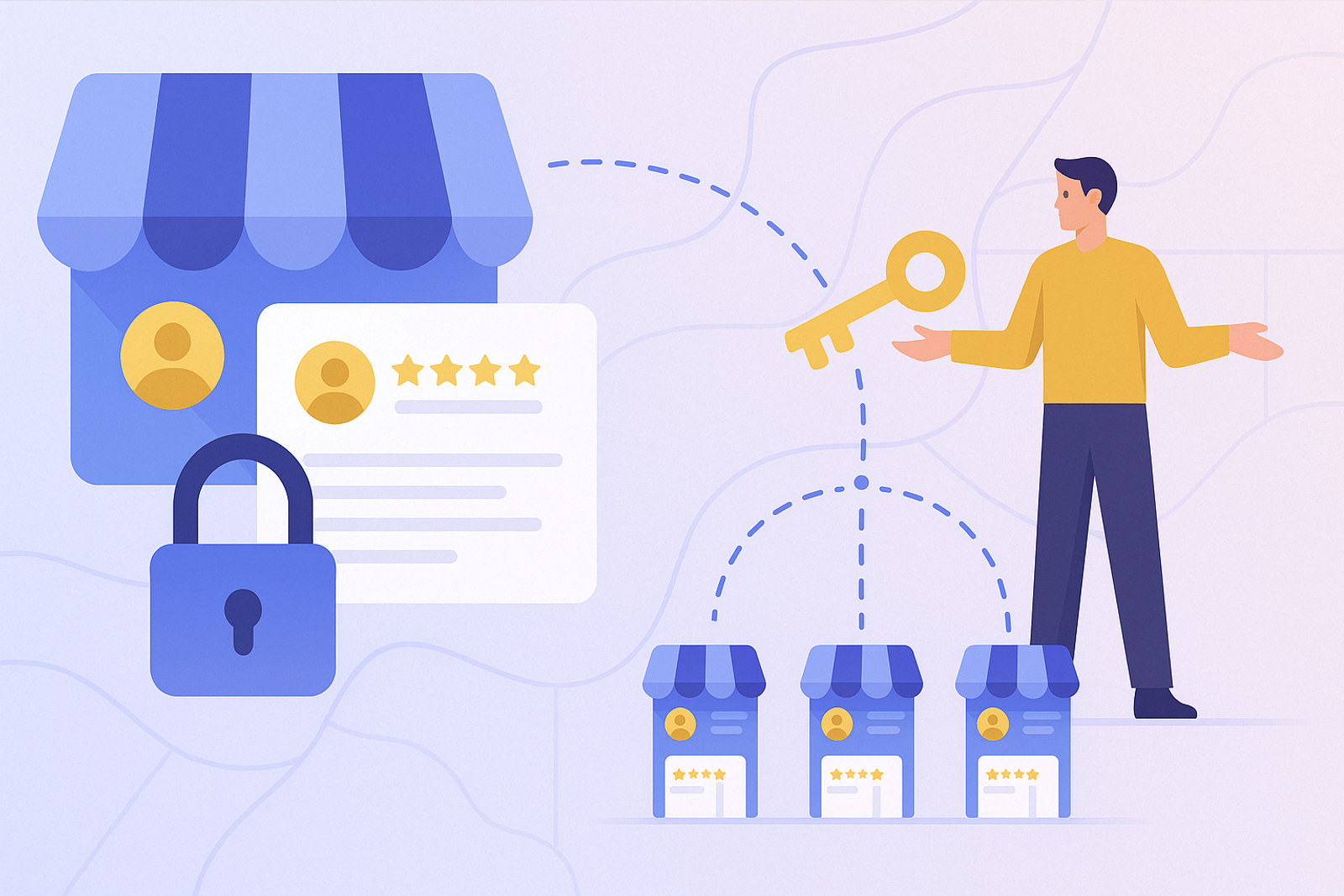
In a franchise model, the franchisor needs to maintain brand consistency in Google Business Profile, while each franchisee requires enough autonomy to respond to reviews and communicate local events. The native Google panel was not designed for this balance.
The "All or Nothing" Access Problem with Google
Google Business Profile offers roles of "Owner", "Manager", and "Editor", but these are too broad for a franchise model: a manager can still edit categories, names, or delete corporate photos, something that the franchisor typically wants to restrict.
What a Local Franchise Manager Should Be Able to Do
Respond to reviews using approved templates, publish Google Posts about local events or promotions, update special hours for their branch, and upload recent photos of the location.
What Should Be Controlled Solely by Corporate
Business name, primary category, brand description, and the removal of content (photos, posts) published by corporate.
How to Implement This Separation of Permissions
A management platform connected via API allows for the creation of custom roles (not Google's generic roles) that precisely restrict which fields each user can modify, with an audit trail of every change, something that Google does not offer natively.
Benefits of Proper Permission Management
1. **Brand Consistency**: Maintaining brand image is crucial for consumer trust. By controlling what information each franchisee can edit, you ensure that communication is coherent.2. **Local Autonomy**: Allowing local managers to handle certain interactions gives them the necessary flexibility to respond to the needs of their community.3. **Operational Efficiency**: With clear roles, errors are reduced, and efficiency in managing business information improves.4. **Better Customer Experience**: Managers can respond quickly to reviews and inquiries, which enhances customer perception of the brand.
Example of an Effective Workflow
1. **Receiving Reviews**: Managers receive notifications of new reviews and use approved templates to respond.2. **Content Publishing**: Managers can create posts about local events, but they must be reviewed by corporate before publication.3. **Updating Information**: Managers can update special hours, but must follow an established format to ensure uniformity.
Checklist for Effective Permission Management
- Clearly define what permissions each role needs.- Establish a review process for content published by managers.- Implement a management platform that allows for role customization.- Train managers on how to use the available tools.- Regularly monitor and audit activities on the profile.
Frequently Asked Questions
What happens if a franchisee leaves the network? Do I lose control of the listing?
If access is managed from a centralized platform with role-based permission control, revoking access from a departing franchisee is immediate, without relying on them to transfer ownership in Google.
Do custom permissions work the same in all regions?
Yes, because they are managed at the level of the platform connected to the API, regardless of the country or region where each franchise operates.
Conclusion
The success of a franchise network in Google Business Profile depends on finding the balance between local autonomy and brand control. Granular permissions, not Google's generic roles, are the right tool to achieve this.
**Additional Considerations for Franchise Management**
When managing a franchise network, it’s essential to consider the unique challenges that come with multiple locations. Each franchise may have its own local culture and customer base, which can influence how they interact with the brand.**1. Tailored Marketing Strategies**: Each franchise should have the ability to implement marketing strategies that resonate with their local audience. This could include localized promotions, community engagement activities, and partnerships with local businesses.**2. Regular Training and Updates**: To ensure that all franchisees are on the same page, regular training sessions should be conducted. This helps franchisees stay updated on brand guidelines, new tools, and best practices.**3. Feedback Loops**: Establishing a system for feedback from local managers can provide valuable insights into customer preferences and operational challenges. This feedback can help the corporate team make informed decisions.**4. Technology Integration**: Leveraging technology is crucial for efficient management. Ensure that all franchisees have access to the same tools and platforms to streamline operations and maintain brand consistency.**5. Performance Metrics**: Define clear performance metrics for each franchise location. This will help in assessing their performance and making necessary adjustments to strategies.