

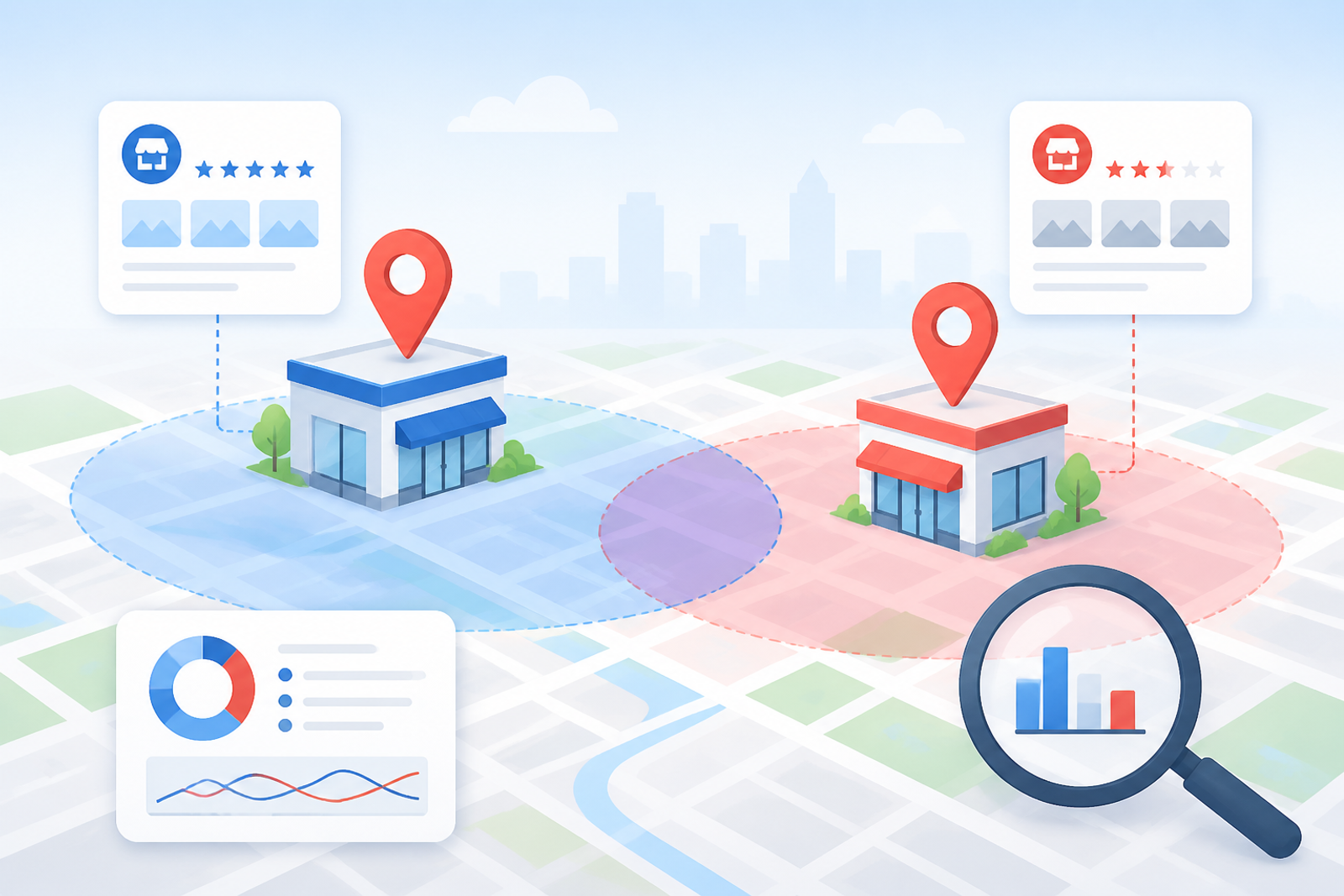
Cannibalization occurs when two branches of the same brand compete against each other for the same searches, instead of each dominating its own geographical area of influence.
When Cannibalization Occurs
It is more common in densely populated urban areas, where two branches of the same chain are just a few kilometers apart and literally compete for the same local search results.
Signs That You Are Cannibalizing Your Own Branches
Reviews, photos, and activity disproportionately concentrated in one branch while another nearby remains practically inactive, or identical descriptions and categories word for word between neighboring branches.
How to Differentiate Nearby Branches Without Fragmenting the Brand
Each branch should have a unique description (not copied), specific photos of the particular location, and review and post activity distributed among all branches, not concentrated in the oldest or most well-known branch in the area.
Frequently Asked Questions
Do two very close branches always cannibalize each other?
Not necessarily; if each has differentiated activity, reviews, and content, Google can correctly distinguish them even if they are physically close.
Is it advisable to merge two very close branches into a single listing?
No, if both are real physical locations; Google requires one listing per physical location, and merging violates its policies, in addition to causing confusion for customers looking for the nearest branch.
Conclusion
Avoiding cannibalization among nearby branches requires treating them as individual entities with their own identity within the brand, not as exact copies of a shared template.
Strategies to Prevent Cannibalization
1. **Optimize Descriptions**: Ensure that each branch has a unique description that reflects its specific characteristics, such as hours, services, and local promotions.
2. **Create Local Content**: Publish content that highlights events, promotions, and relevant news for each branch. This will not only attract more customers but also help Google identify the local relevance of each location.
3. **Encourage Specific Reviews**: Encourage customers to leave reviews at the branch where they made their purchase. This not only improves the visibility of that location but also provides clear signals to Google about the activity of each branch.
4. **Use Google My Business**: Ensure that each branch is correctly set up on Google My Business, with accurate and updated information. This includes hours, address, phone number, and photos.
5. **Monitor Performance**: Use analytics tools to track the performance of each branch in terms of traffic and conversions. This will allow you to adjust your strategies as needed.
Successful Use Cases
One notable example is a coffee chain that, by implementing unique descriptions and local content for each branch, managed to increase its visibility on Google Maps and, as a result, saw a 30% increase in store visits.
Checklist to Avoid Cannibalization
- [ ] Unique descriptions for each branch.
- [ ] Relevant local content published regularly.
- [ ] Specific reviews for each location.
- [ ] Updated information on Google My Business.
- [ ] Regular monitoring of the performance of each branch.
By following these strategies and regularly reviewing your approach, you can effectively manage your multi-location SEO efforts and ensure that each branch thrives without infringing on the others. Remember, the goal is to create a unique identity for each location while maintaining a cohesive brand presence.
In conclusion, understanding and addressing cannibalization in local SEO is crucial for businesses with multiple branches. By implementing the strategies outlined above, you can enhance your visibility in local searches and drive more traffic to each of your locations.